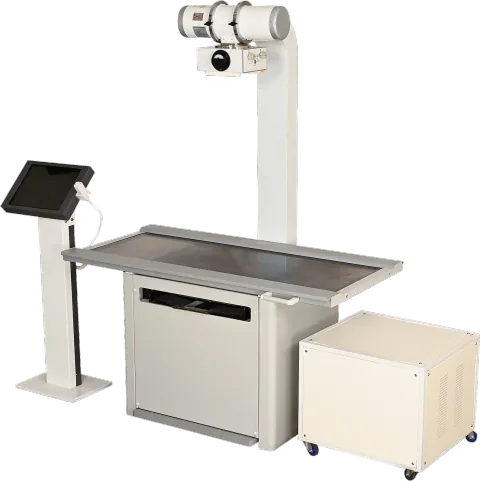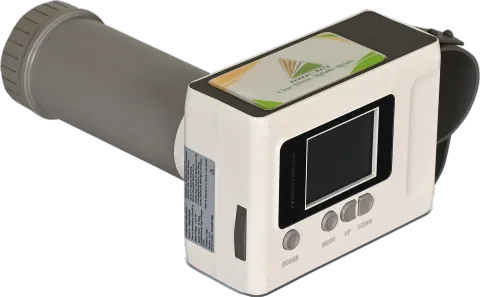
Handheld, high frequency
- Format
- Handheld
- Generator
- High frequency
- Controls
- Display and keypad on the housing
 Bharat Rays
 · the range
2 mA to 40 kW · line and high frequency
Seven families of diagnostic X-ray machine, built by Waymed Yamuna in Noida: handheld and portable units that go to the patient, line-frequency sets from 100 to 500 mA, and high-frequency mobiles and room systems from 5 to 40 kW.
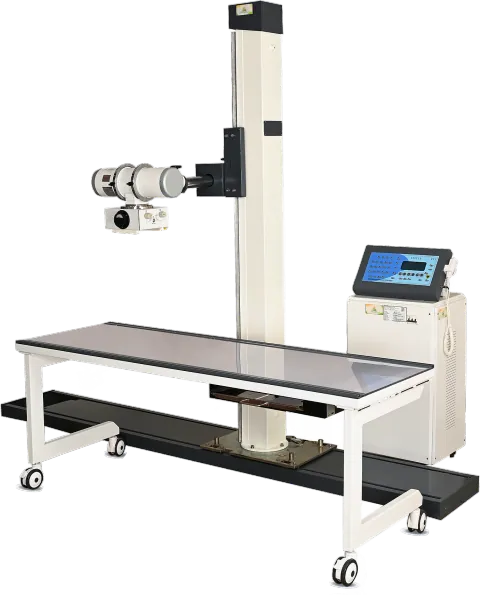
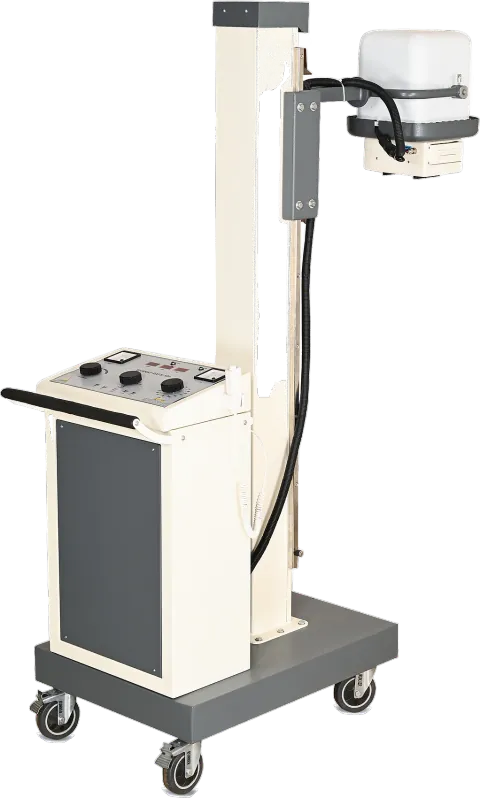
Slide from the smallest handheld to the largest room system. Every stop is a real Bharat Rays machine.
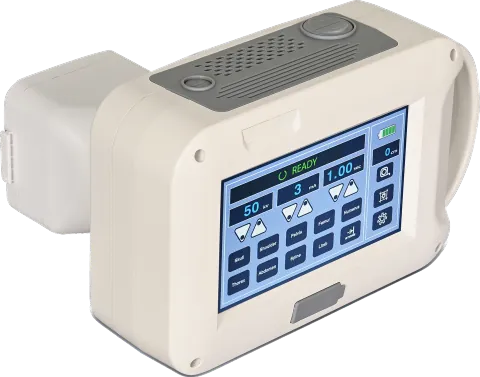
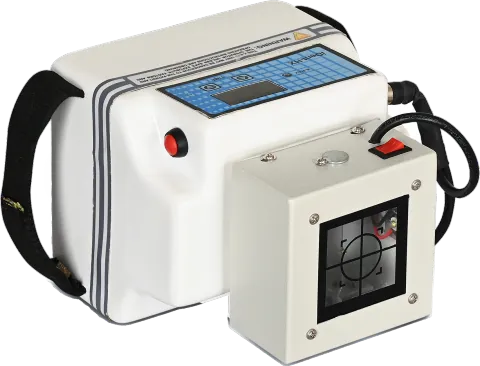
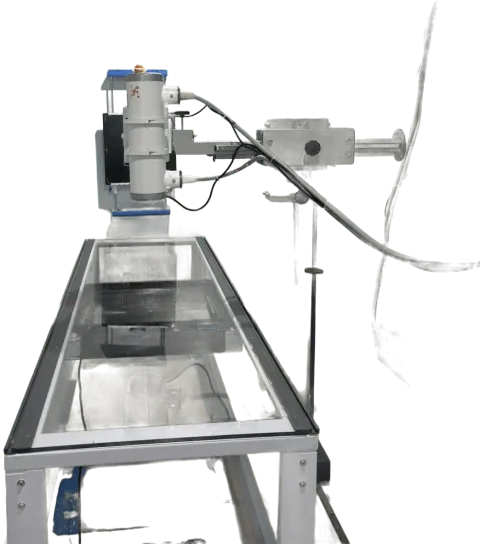
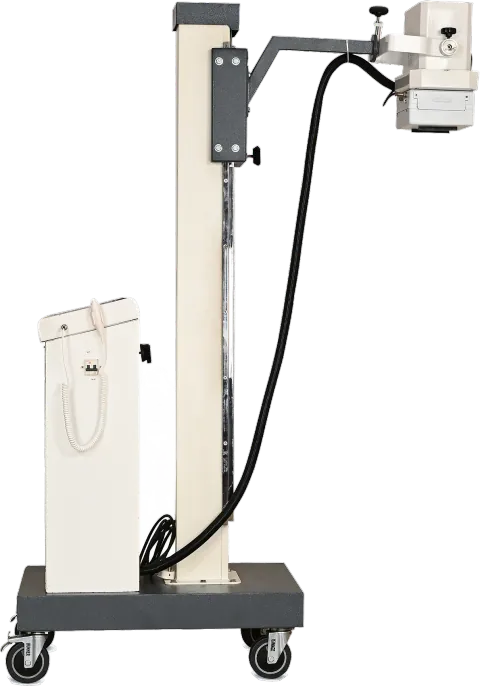
Choose by output: tube current (mA) for the line-frequency sets and portables, generator power (kW) for the high-frequency machines.
Four models have printed specification sheets. Everything below is copied from them.
| 100 mA FIXLine frequency | 300 mALine frequency | 15 kWHigh frequency | 40 kWHigh frequency | |
|---|---|---|---|---|
| Rating | 25 to 100 mA | 300 mA, 125 kVp | 250 mA, 40 to 125 kVp | 500 mA, 40 to 125 kVp |
| Output | 8 kW | 24 kW | 15 kW | 40 kW |
| Exposure | Timer 0.06 to 5 s | Timer 0.06 to 5 s | 1 to 200 mAs | 1 to 200 mAs |
| Generator | Full-wave rectified | Full-wave rectified | High frequency, microcontroller | High frequency, microcontroller |
| X-ray tube | XD-3 or imported | Rotating anode | Rotating anode, monoblock head | Rotating anode, monoblock head |
| Tube stand | Fixed | Fixed and ceiling-free | Counter-balanced, floor and ceiling-free | Counter-balanced, floor and ceiling-free |
| Safety | Electronic overload protection | Electronic overload protection | Interlocks; dual-action hand switch | Interlocks; dual-action hand switch |
| Power | 230 V AC | 440 V | 230 V AC, single phase, ±10% | 440 V AC, three phase, ±10% |
The stand, the detector and the lead that complete an X-ray room.
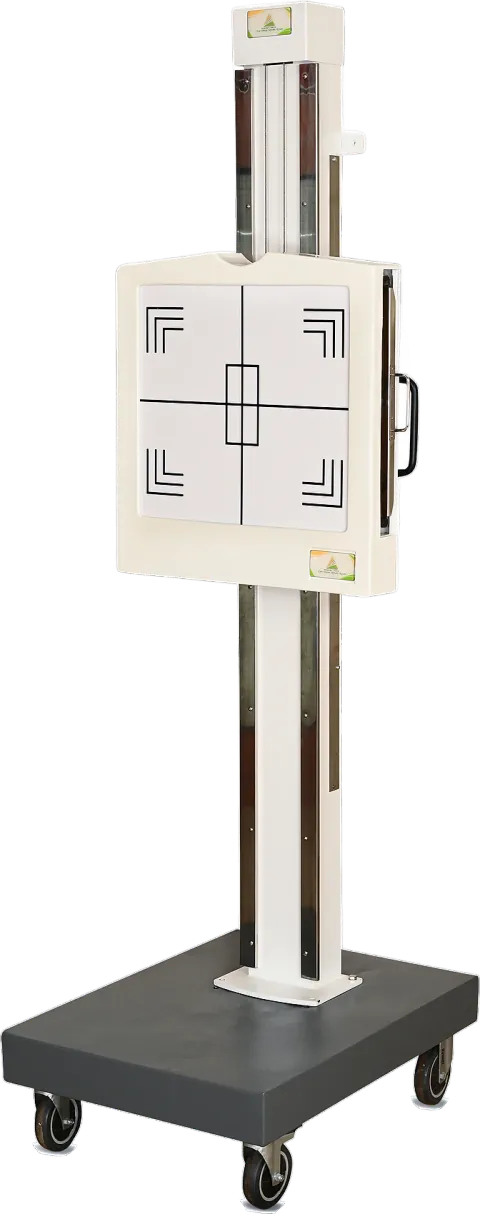
Stand · standing chest and spine

BR-1717S · 17 × 17 in · IGZO
Wireless and wired in one box. Fits a bucky as a cassette-size detector (ISO 4090).
DR flat panel detector →
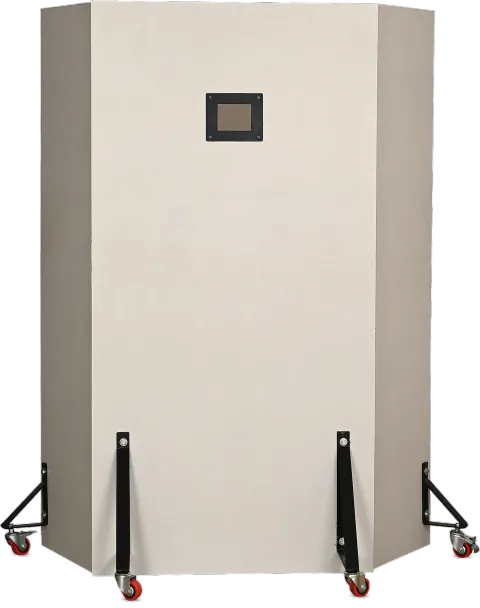
Lead wear · barriers
Aprons, thyroid guards, caps, gloves and shields in 0.25 or 0.5 mm Pb; barriers, screens and curtains.
Radiation protection →Short, plain answers. Anything else: call 1800 309 9729, toll free.
A line-frequency generator works its high-voltage transformer at the mains frequency (50 Hz in India) and rectifies the output, so the tube voltage rises and falls with each mains cycle. A high-frequency generator first converts the mains into a much higher frequency, which gives a nearly steady tube voltage from a smaller transformer and more consistent exposures. In the Bharat Rays range the 10 mA portable and the 100, 300 and 500 mA sets are line frequency; the 2 mA handheld, the 5 mA portable and the 5 to 40 kW machines are high frequency.
mA is the X-ray tube current. mAs is that current multiplied by the exposure time in seconds, which sets how much radiation one exposure makes. kVp is the peak tube voltage, which sets how penetrating the beam is. kW is the power of the generator: the more power, the shorter the exposure needed for the same mAs.
Start from where the patient is and how many you see. A portable (2, 5 or 10 mA) goes to the bedside or a camp; a 100 mA set fits a smaller X-ray room; a 300 or 500 mA set or a 15 to 40 kW high-frequency room system suits a busy department; a 5 or 8 kW high-frequency mobile moves between wards. Check the power supply too: the 100 mA FIX and the 15 kW run on 230 V AC, while the 300 mA and the 40 kW need 440 V (three phase for the 40 kW). Tell us the room, the daily patient load and the supply, and we will recommend a model.
Yes. The Atomic Energy Regulatory Board (AERB) requires every user of medical diagnostic X-ray equipment to hold a licence for operation, applied for through its e-LORA portal. The equipment must be type-approved and bought from an authorised supplier, and the room must follow AERB's layout and shielding guidelines. See AERB's e-LORA guidelines for diagnostic radiology, and ask us about the model you are buying.
Reference
Thank you, . Our team will call you back on .
Anything urgent? Call 1800 309 9729, toll free.